Artificial intelligence for interior design
Artificial intelligence is rapidly becoming a practical creative tool for interior design. While AI may seem like a recent innovation, the underlying technologies have been developing for decades. What has changed is accessibility: interior designers, architects and creative professionals can now use AI directly in their daily workflow without needing technical expertise.
What is artificial intelligence in interior design?
Artificial intelligence (AI) refers to software systems that can analyze data, recognize patterns and generate outputs such as text, images or recommendations based on learned information.
In interior design, AI can support a wide range of tasks, including:
generating interior concepts and style directions,
creating mood boards and visual inspiration,
creating 3D renderings,
assisting with material, color and furniture combinations,
supporting interior design and home staging businesses, including marketing and client communication.
Rather than replacing creativity, AI acts as a “creative accelerator” that helps designers explore more options in less time.
How AI became part of the design workflow
Although AI research began decades ago, early systems were limited to academic and industrial use. The technology was not practical for everyday business or design work due to limited computing power and data access.
The major shift occurred in the early 2020s, when advances in machine learning and large-scale data processing made AI systems significantly more powerful.
A key moment came in late 2022 with the rise of tools like ChatGPT, which made advanced AI systems available to non-technical users. Around the same time, visual AI tools began transforming fields such as architecture, product design, and interior visualization.
Today, AI is increasingly integrated into design workflows - from early concept development to client presentation stages.
How AI actually works
AI does not “understand” interiors in the human sense. It does not have taste, emotion or personal design intent. Instead, it works through statistical pattern recognition.
AI systems are trained on enormous datasets that may include:
interior design images,
architectural references,
color compositions,
text descriptions of design styles.
From this data, the system learns relationships - such as which materials, forms and colors often appear together in specific styles (e.g., Scandinavian, Japandi, industrial, contemporary luxury).
When you give AI a prompt, it does not evaluate meaning like a designer would. Instead, it predicts the most likely visual or textual outcome based on patterns it has seen before.
This is why AI can generate surprisingly relevant design ideas - even for projects it has never explicitly “seen.”
What are Large Language Models (LLMs) in interior design?
Large Language Models (LLMs) are AI systems specifically trained for language-based tasks. They learn from enormous amounts of text data and are capable of recognizing which word, sentence or idea is most likely to follow within a given context.
LLMs do not store “knowledge” in the traditional sense. Instead, they operate through probabilities. They estimate which response best fits a given question based on patterns learned from vast datasets.
Models such as ChatGPT, Claude or Google Gemini are built on this type of technology. When you ask a question, they generate a new, unique text based on your input and the surrounding context.
In interior design practice, they are used for:
writing design concepts and project descriptions,
creating client presentations and narratives,
generating branding and marketing content,
summarizing design decisions and material choices,
supporting communication with clients and contractors.
This is why the way you formulate your questions is critical. The clarity of your prompt, the background information you provide, and how precisely you define your goal all directly influence the quality and relevance of the output.
For interior designers, this means that well-structured prompts are not just helpful - they are essential for generating accurate concepts, strong visual directions and professional-level design narratives.
What is a chatbot?
Chatbots are conversational interfaces that allow users to interact directly with artificial intelligence systems. A well-known example is the ChatGPT or Gemini chatbot.
It is important to understand that the chatbot itself is not the intelligence. It is simply the interface through which the user communicates, while a large language model operates in the background to process and generate responses.
This distinction is important in practice because the same logic applies across different AI tools. Well-structured prompts and clear instructions are not tied to a single platform - they can be used across various chatbot systems and AI tools used in interior design and creative workflows.
If you learn how to ask precise, well-framed questions, this skill remains transferable even when you switch to different AI platforms in the future.
Why AI is transforming interior design
AI enables designers to:
work more efficiently and streamline design processes,
visualize ideas faster,
improve clarity in client communication and presentations,
reduce repetitive administrative tasks,
support decision-making with structured, data-informed outputs.
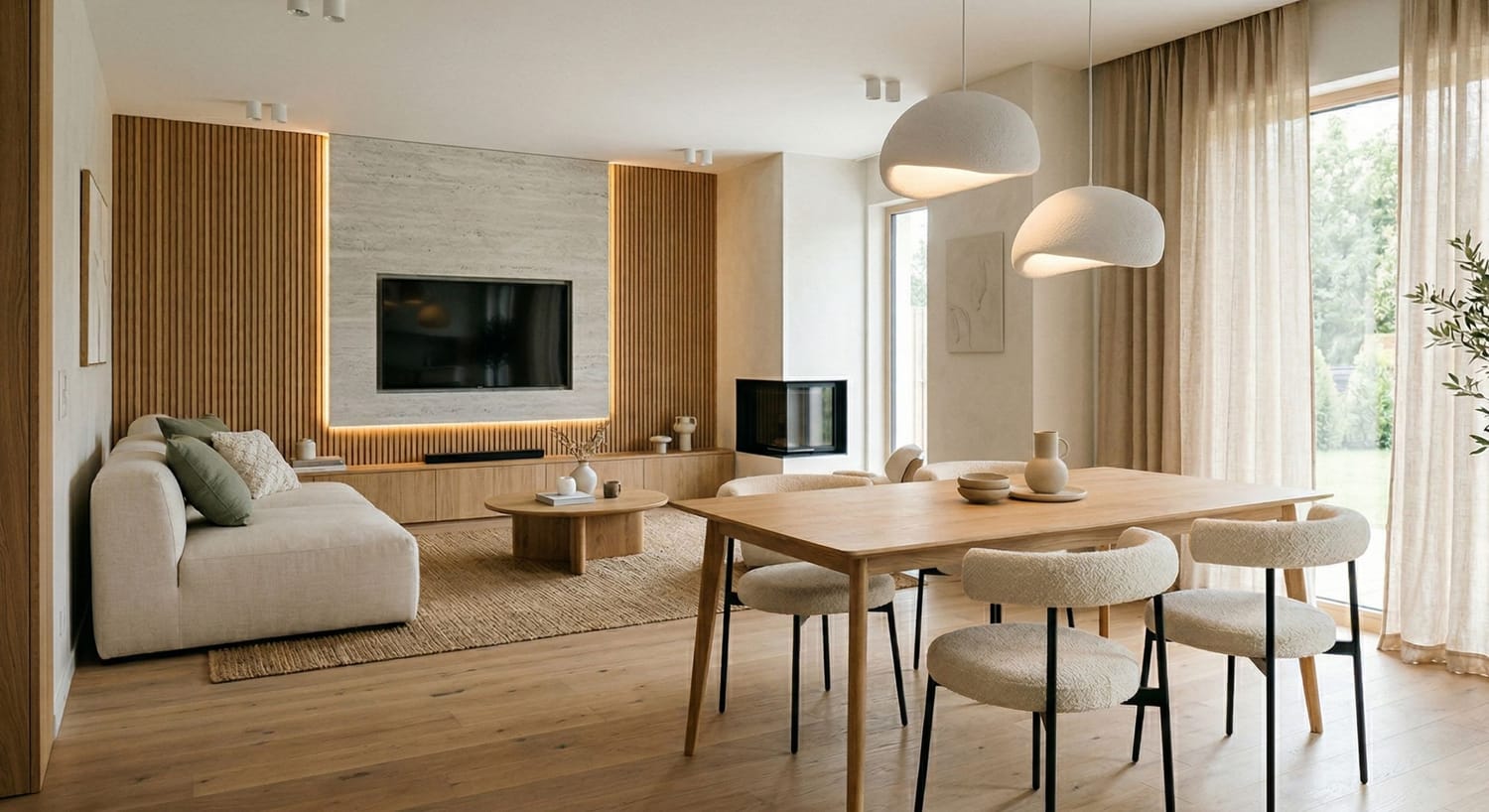
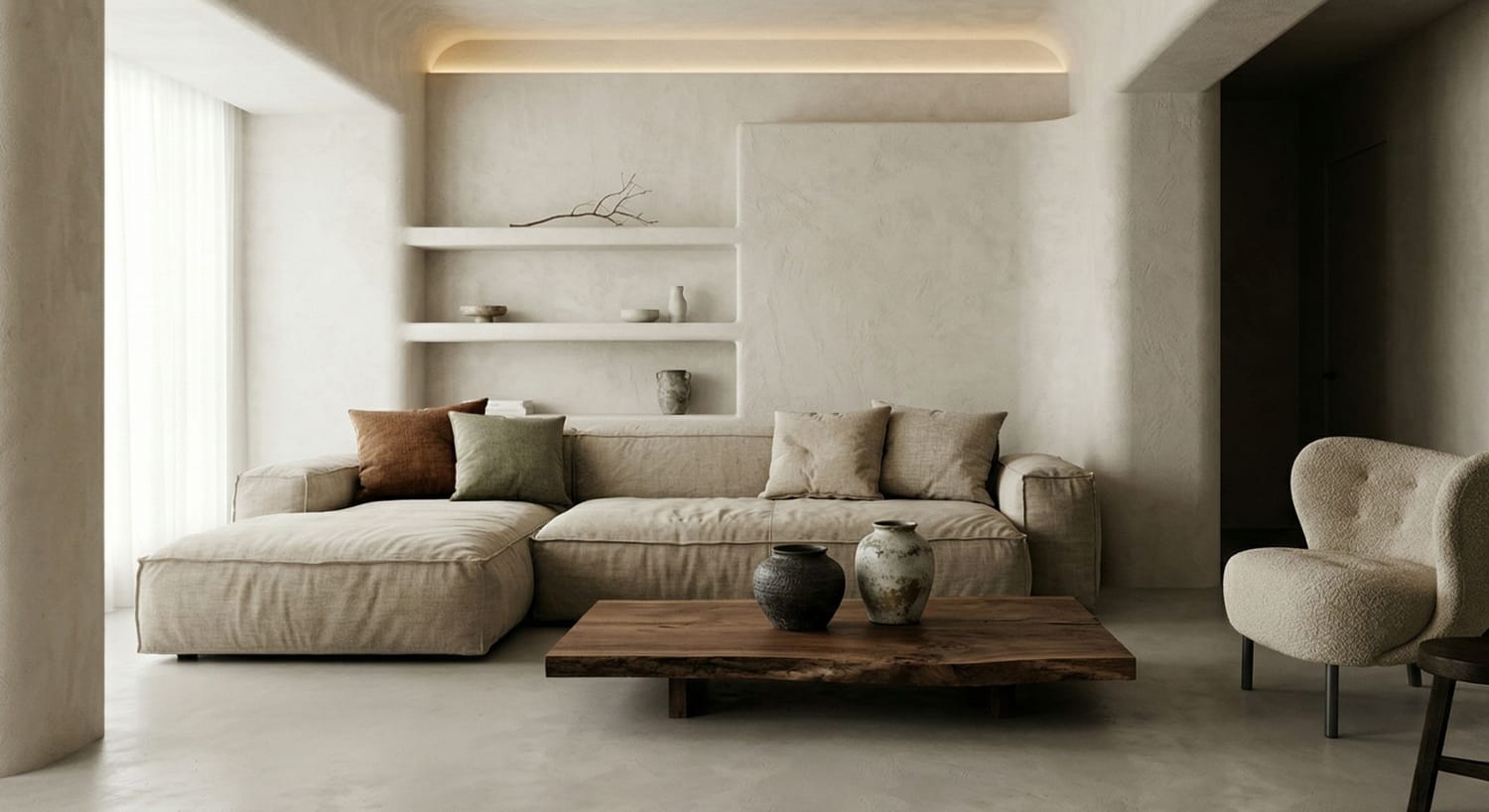
It supports the generation of inspirational visuals, 3D renderings, and redesign concepts, which enhances efficiency and improves collaboration with clients.
The real competitive advantage does not come from the technology itself, but from knowing how to guide it effectively. Designers who can provide precise, context-rich instructions are able to extract significantly higher-quality results and turn AI into a reliable creative and strategic assistant.
Summary
AI interior design is a system of tools that support creativity, visualization and communication.
Large Language Models handle language-based tasks, while other AI systems assist with visual generation and design exploration. Chatbots serve as the interface that makes these technologies accessible in everyday work.
AI does not think like a designer. It generates outputs based on statistical patterns from data. For this reason, the quality of results depends heavily on how clearly and strategically you communicate your design intent.
Used correctly, AI becomes a powerful extension of the designer’s workflow - supporting ideation, presentation and client communication while freeing more time for real creative decision-making.
Learning to communicate your design intent - the skill that changes everything
AI generates outputs based on patterns, not design understanding. This means the results improve not by using better tools, but by developing a clearer, more strategic way of giving instructions.
This is exactly what the AI for Interior Designers course is built around. Rather than focusing on individual tools in isolation, it teaches how to communicate design intent - across ideation, visualisation, client presentation and business tasks - in a way that produces consistent, professional results.
Designers who complete the course don't just learn to use AI. They build a workflow where AI genuinely extends their practice, handles the repetitive work and frees up time for the decisions that require real creative expertise.
→ Explore the course AI for Interior Designers
Self-paced. Lifetime access. Built specifically for interior designers, architects and home stagers.
AI & Canva courses for interior designers, architects and home stagers
www.designerslearnai.com




© 2026 Designers Learn AI. All rights reserved.